
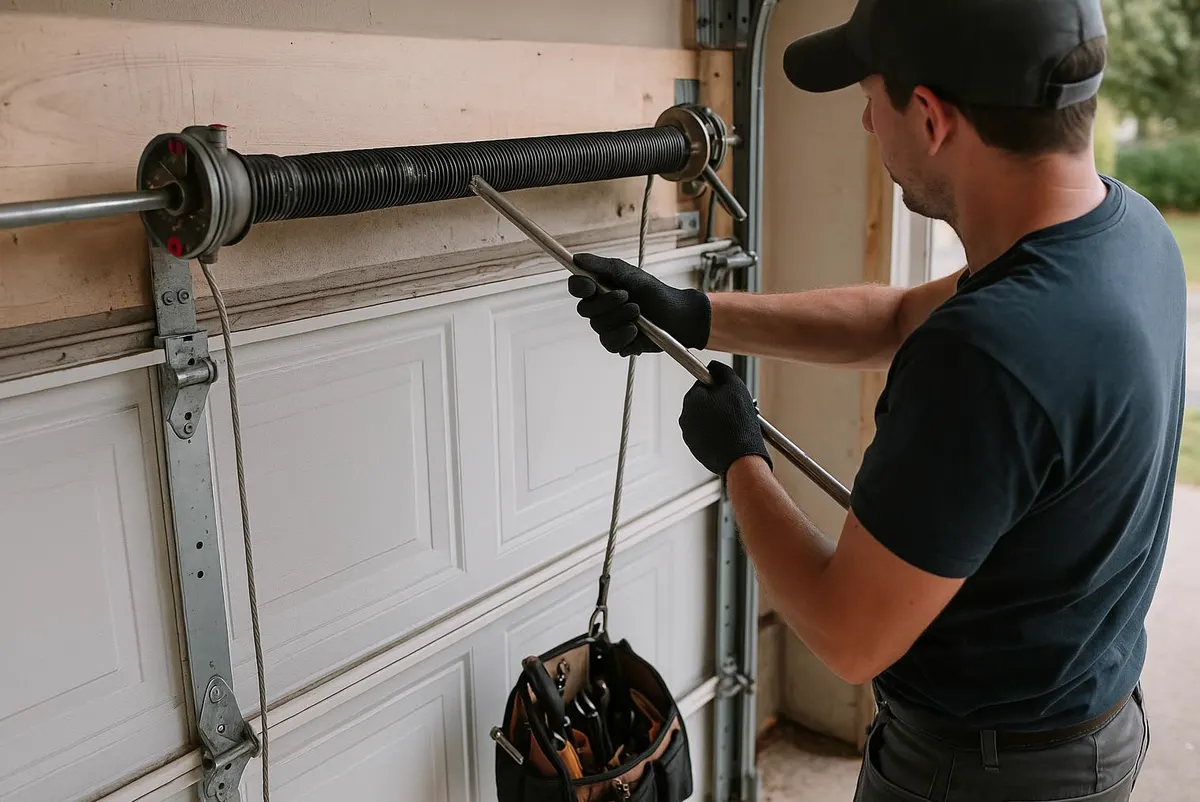
The First Thing Most People Try (and Why It Backfires)
When a garage door starts scraping, jerking, or hanging crooked, the instinct is to grab a pair of pliers or a rubber mallet and muscle the track back into place. It is tempting because the fix looks simple: the metal is visibly bent, so bending it back seems like common sense, and it costs nothing but a few minutes. The problem is that garage door tracks are calibrated to a precise alignment against the frame and the rollers. Hand-bending them almost never restores that exact angle, and a track that looks straight to the eye can still be off by enough to bind the rollers, strain the opener motor, or let the door jump the track entirely the next time it runs. By the time most homeowners call for help, the track has been "fixed" two or three times and the damage has spread to the rollers, hinges, or opener gears.
Symptoms That Point to a Track Problem
Bent or misaligned tracks rarely announce themselves with one obvious sign. Usually it is a combination of small things that get worse over a week or two:
- Scraping or grinding sounds as the door travels, especially near the same spot each cycle
- Visible gap between the rollers and the track, or a track that bows outward from the wall
- Door hangs crooked when open, with one side higher than the other
- Jerky or hesitant movement, like the door is fighting itself partway through the cycle
- Rollers popping out of the track, sometimes with a loud bang
- Door won't fully close, leaving a gap at the bottom corner
Any one of these on its own might be minor. Two or more together usually means the track has shifted enough to need a real inspection.
What Causes It: The Order a Technician Checks
1. Loose or Shifted Mounting Hardware
Before assuming the track itself is damaged, a technician checks the brackets and lag bolts that hold it to the wall and door frame. Vibration from daily use, plus the freeze-thaw cycle that moves house framing slightly every winter, can work these fasteners loose over a few seasons. The fix here is straightforward: retighten or replace the brackets and re-square the track against a level line. This is the cheapest cause to fix and the most common starting point.
2. Impact Damage
Next comes physical impact — a car bumper clipping the track, a ladder or bike leaning against it, or a snow blower catching the bottom section during winter cleanup. Impact dents the track inward or pushes it off its vertical line in one specific spot, which is usually easy to spot because the bend is sharp rather than gradual. If the bend is minor and in a low-stress area, careful realignment with the right tools can work. If the metal is kinked or cracked, the damaged section needs to be replaced rather than reshaped, since a weakened track can fail under the door's weight.
3. Worn or Broken Rollers
If the hardware is tight and there is no sign of impact, the rollers themselves are the next suspect. Nylon rollers wear down over years of use, and metal rollers can develop flat spots or seized bearings. A worn roller does not travel smoothly, so it drags against the track and gradually pushes it out of alignment from the inside. The fix is roller replacement, which is relatively inexpensive and often solves what looked like a track problem without touching the track at all.
4. Warped or Misaligned Door Panels
Chicago-area summers bring real humidity, and winters bring deep cold — that swing causes some door materials to expand, contract, or warp slightly over time, especially on the sun-facing side of the garage. A warped panel pulls the whole door slightly out of square, which puts uneven pressure on the tracks every time it opens or closes. Diagnosing this means checking the door panels with a straightedge for twist or bowing. If a panel is warped, the realistic fix is panel replacement rather than trying to force the track to compensate.
5. Frame or Foundation Shift
The last thing a technician checks, because it is the least common and most involved, is whether the garage opening itself has shifted — something more likely in older homes where the foundation has settled slightly over the years. If the frame is no longer square, the track mounted to it will drift out of alignment no matter how many times it gets adjusted. This usually requires re-shimming the track mounts to compensate for the new angle, and in more serious cases, a broader structural look that goes beyond the garage door itself.
Why This Matters More in Fall and Winter
Heading into the colder months, bent tracks get worse faster. Ice and salt tracked in from driveways and sidewalks can corrode mounting hardware and roller bearings, and cold temperatures make metal more brittle and more likely to crack rather than bend cleanly if it takes an impact. A track that is slightly off in October is a reasonable fix now; the same track left alone through a Naperville winter often turns into a jammed door or a snapped cable by February.
When to Call Naperville Garage Door
If the door is scraping, hanging crooked, or a roller has already popped loose, it is time to call rather than keep adjusting it by hand. Our Garage Door Repair service covers exactly this kind of diagnostic work — checking hardware, rollers, panel alignment, and the track itself in the order that actually finds the real cause, instead of guessing. If the inspection turns up wear that is still early, our Garage Door Maintenance service can tighten hardware, lubricate rollers, and catch small misalignments before they turn into a stuck or jumped door during the first hard freeze.
If your garage door in Naperville, IL is scraping, sticking, or hanging unevenly, call Naperville Garage Door for same-day service before the problem gets worse in colder weather.